Summary
The January 2026 unrest in Iran occurred during a period of severe economic crisis, escalating sanctions, foreign political pressure, and two major wars involving Iran, Israel, and the United States (June 2025 and February 28, 2026). The evidence indicates that:
- The unrest began amid a severe currency crisis and economic hardship
- U.S. officials publicly acknowledged policies designed to intensify economic pressure on Iran
- U.S. and Israeli figures publicly encouraged anti-government protests
- A Persian-language account associated with Mossad claimed that it was with protesters“in the field”
- Former U.S. Secretary of State Mike Pompeo publicly referred to “every Mossad agent walking beside” Iranian protesters
- Donald Trump later stated that the United States had attempted to send weapons intended for Iranian protesters
- Armed elements emerged during the unrest, and security personnel were among those killed
- The official Iranian death toll was 3,117
- The Iranian government published identifying information for 2,986 deceased persons and established a public verification mechanism for additional claims
- Geopolitical Context
The January 2026 unrest did not occur in isolation. It took place between two major wars involving Iran, Israel, and the United States.
On June 13, 2025, Israel launched a large-scale military campaign against Iran while U.S.-Iran nuclear negotiations were underway. The next round of negotiations, scheduled for Oman, was subsequently cancelled. The conflict expanded to include direct U.S. military participation.
On February 28, 2026, Israel and the United States launched a second and larger war against Iran again in the middle of Iran-US negotiations mediated by Oman. In fact, hours before the new war was waged the Omani foreign minister had announced in Face the Nation that there had been a breakthrough in the negotiations and peace is within reach. The opening phase of the US/Israeli attack included assassination of dozens of senior Iranian political and military leaders including the supreme leader and several of his family members.
- The Economic Trigger: US-Engineered Currency Collapse
The unrest began on December 28, 2025, when traders and shopkeepers in Tehran’s Grand
Bazaar — the historic heart of Iran’s merchant class — went on strike over the collapsing rial.
Currency collapse figures:
- The rial fell to 145,000 against the US dollar
- The rial’s value fell by 16% in December alone
- The currency had lost roughly 60% of its value since the June 2025 war
- Food inflation reached an annual rate of 72%, nearly double the official target
On February 5, 2026, U.S. Treasury Secretary Scott Bessent testified before the Senate Banking Committee and openly admitted that the Trump administration deliberately engineered the collapse of Iran’s currency:
“We created a dollar shortage in the country. And it happened quickly. I would say the climax came in December, when one of Iran’s largest banks went bankrupt after a massive bank run. The central bank was forced to print money. The Iranian currency plummeted, inflation skyrocketed, and as a result, we see Iranians on the streets.”
Bessent further revealed that he had outlined this plan in a March 2025 speech, where he stated the goal was to “collapse [Iran’s] already buckling economy” and “make Iran broke again”. Economist Jeffrey Sachs confirmed that Bessent’s testimony demonstrated the US was waging “war conducted by economic means”.
- The Peaceful Protests (December 28, 2025 – January 7, 2026)
For approximately two weeks, the protests remained largely peaceful and were confined to economic demands.
Nature of the initial protests:
- Peaceful, focused on economic grievances
- The government showed restraint and promised to address the shopkeepers’ demands
- The protests were localized and centered on the bazaar — not initially anti-government
- Foreign Influence of Protest Activity
4.1 Mossad’s Public Announcement
On January 2, 2026, a Persian-language account associated with Mossad called for Iranians to protest:
“Go out together into the streets. The time has come. We are with you. Not only from a distance and verbally. We are with you in the field.”
This statement was reported by Israeli media and became a major point of controversy.
4.2 Mike Pompeo’s Explicit Acknowledgment
On January 2, 2026, former U.S. Secretary of State and CIA Director Mike Pompeo posted on X:
“Happy New Year to every Iranian in the streets. Also to every Mossad agent walking beside them.”
Pompeo’s statement was an explicit acknowledgment that Israeli intelligence agents were operating inside Iran and embedded among the protesters.
4.3 Donald Trump’s Encouragement
Trump repeatedly encouraged anti-government protests in Iran. On January 2, after meeting Israeli Prime Minister Benjamin Netanyahu, he declared:
“The U.S. is locked and loaded.”
Later, as the riots escalated, Trump urged rioters on his social media platform to “keep protesting” and “take over your institutions” — a direct call to seize government property.
He declared: “HELP IS ON ITS WAY. MIGA!! (Make Iran Great Again).”
- Trump’s Admission on Weapons for Protesters
In April 2026, Trump stated that the United States had attempted to provide weapons intended for anti-government actors in Iran, but that the weapons had been diverted before reaching their intended recipients. He stated: “I’m very upset” about the diversion.
If accurate, this constitutes one of the most significant public admissions regarding attempted material support for anti-government actors during the unrest.
- The Armed Hijacking (January 8-9, 2026)
According to Iranian Foreign Minister Abbas Araghchi, armed terrorists appeared among the demonstrators on January 8. This marked the turning point from peaceful protest to armed insurrection.
Once armed elements infiltrated the protests, the violence escalated dramatically.
Infrastructure Attacked
According to official Iranian data released through the Iranian embassy in Russia:
| Category | Number Destroyed/Damaged |
| Mosques | 53 burned (25 in Tehran alone) |
| Ambulances | 180 burned |
| Banks | 26 burned in Tehran alone |
| Other attacks | Clinics, buses, fire brigade trucks, public property |
Casualties Among Security Forces
- At least 40 law enforcement officers were killed
- Approximately 200 security personnel lost their lives in total
Weapons
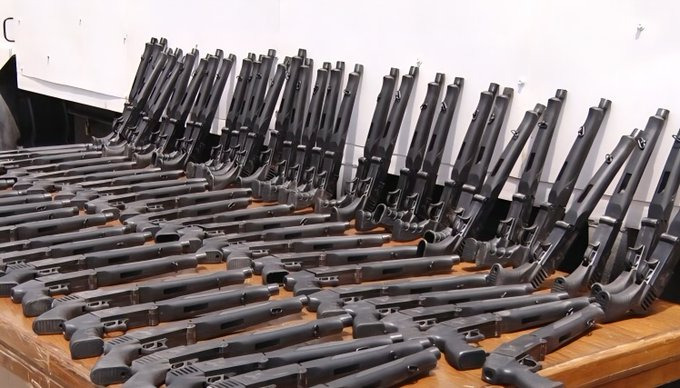
Iranian officials reported that weapons confiscated from the rioters were found to be smuggled arms made by American or Israeli manufacturers.
- Government Response
Once armed rioters began attacking civilians, burning mosques and ambulances, and murdering security personnel, the Iranian security forces intervened.
- Internet was shut down only after authorities confirmed that orders were coming from outside the country
- The government asked people not to join the armed rioters
- The security forces acted to prevent the kind of prolonged insurgency that had destroyed Libya, Syria, and Iraq
As Professor Foad Izadi of Tehran University explained:
“It initially started as a peaceful protest by merchants, who were upset about currency fluctuations, but that was quickly hijacked by Israel and the U.S.”
- Official Casualty Figures: Government Transparency
Government’s Published Data
On January 21, 2026, Iran’s Supreme National Security Council announced that 3,117 people had been killed during the unrest.
On February 1, 2026, the Office of the President published identifying information for 2,986 deceased persons and reaffirmed the official death toll of 3,117.
The published information included:
- First name
- Surname
- Father’s name
- Last six digits of the national identity number
The Presidency explained that the difference between 2,986 and 3,117 was largely attributable to unidentified bodies and unresolved registration issues (131 additional cases pending verification).
The presidential statement emphasized:
“All victims of these incidents and recent unrest were children of this land” and should not be reduced to mere statistics.
Public Verification Mechanism
The government announced the creation of a public verification system through which citizens could submit information concerning additional victims. A subsequent platform was established to receive and verify claims.
Iranian Foreign Minister Abbas Araghchi publicly challenged critics:
“If anyone doubts the accuracy of our data, please speak with evidence.”
He further stated that Iran is ready to revise its figures if any credible party can produce even a single verified identity not currently on the government’s published list.
Only 17 additional persons were reported by families to have perished beyond the government’s list.
- Western Media Fabrication
Despite Iran’s transparent publication of verified names and IDs, Western media outlets and US-based organizations circulated wildly inflated and unsubstantiated casualty figures:
| Source | Claimed Death Toll | Evidence Provided |
| Various Western outlets | 7,000 – 80,000 | None – no names, no IDs, no documentation |
| US-based HRANA | 544 (early estimate) | Based on anonymous “activists” |
| Norway-based IHR | 648 (early estimate) | Unverified |
The Tehran Times noted that these inflated figures appeared “without any accompanying names, documentation, or forensic proof” and were circulated by a Washington-based website run by a former detainee previously convicted in Iran for collaborating with foreign intelligence.
Radio Free Europe/Radio Liberty, a broadcaster funded by the U.S. Congress through the U.S. Agency for Global Media, reported the publication of thousands of names and identity records by the Iranian government. Al Akhbar and The Grayzone criticised portions of the international coverage for relying on casualty estimates whose underlying identities were not publicly disclosed.
Analysts’ conclusion: The inflation of figures was deliberate — a tactic to:
- Manufacture moral urgency
- Legitimize foreign military intervention
- Shift attention away from the well-documented civilian death toll in Gaza
- The Strategic Objective: Preparing for Military Intervention
The US and Israeli strategy was clear: create violence and chaos inside Iran to justify military intervention under the guise of “protecting protesters.”
Timeline of threats:
- June 2025: US and Israel launched a 12-day war against Iran
- January 2026: Trump threatened that “help is on the way”
- Trump warned that if security forces tried to neutralize the armed rioters, he would attack Iran
- Reza Pahlavi (US-based son of the deposed Shah) openly called for US military action against Iran
As Professor Izadi noted:
“Mossad agents were shooting at ordinary citizens because they want to increase the number of deaths so that they could get Trump to attack Iran.”
- International Law Considerations
Article 2(4) of the United Nations Charter prohibits the threat or use of force against the territorial integrity or political independence of another state.
The International Court of Justice’s judgment in Nicaragua v. United States established that arming, training, financing, or directing armed groups operating inside another state may violate international law.
If foreign governments knowingly encouraged, armed, financed, or directed armed actors operating inside Iran, such conduct would raise serious legal questions under these principles.
- Conclusion: A Manufactured Crisis
The January 2026 unrest cannot be understood solely as a domestic protest movement.
The evidence demonstrates that it occurred within a wider context of economic pressure, sanctions, foreign political support for anti-government mobilisation, allegations of foreign oper-ational involvement, and two major wars initiated against Iran by Israel and the United States during periods of active diplomacy. At the same time, genuine domestic economic grievances played a significant role in the outbreak of protests.
The most accurate interpretation is therefore neither a purely spontaneous domestic uprising nor a purely foreign-engineered operation, but a complex interaction between internal discon-tent and external pressure occurring within an environment of regional conflict and geopolitical confrontation.
The sequence of events is clear:
- US Treasury deliberately collapsed Iran’s currency to spark economic unrest
- Peaceful protests by shopkeepers lasted for two weeks
- Mossad agents infiltrated the protests, while Pompeo and Trump openly acknowledged this
- Armed rioters burned mosques, ambulances, clinics, and murdered security personnel
- Iranian security forces intervened to restore order
- Total verified deaths: 3,117, with full transparency (names and IDs published)
- Western media fabricated casualty figures ranging from 7,000 to 80,000 — with zero evidence
- The objective was to create a pretext for US-Israeli military intervention
The January 2026 riots were not a spontaneous “freedom uprising.” They were a hybrid war operation — economic warfare followed by armed insurrection, directed and openly ac-knowledged by US and Israeli officials, designed to destabilize Iran and justify foreign military attack.
References
- Office of the President of the Islamic Republic of Iran, “All victims of the recent events were children of this land,” February 1, 2026.
- Al Jazeera, “At Least 3,117 People Killed During Iran Protests, State Media Report,”January 21, 2026.
- Radio Free Europe/Radio Liberty, “Iran Publishes Protest Death List, But Rights Groups Say Toll Is Far Higher,” February 2, 2026.
- Factnameh, “Review of the list of deceased persons published by the government,” February 6, 2026.
- Katie Britt, “U.S. Senator Katie Britt Questions Treasury Secretary Scott Bessent During Senate Banking Hearing,” February 5, 2026.
- Al Jazeera, “U.S. Says It Caused Dollar Shortage to Trigger Iran Protests: What That Means,” February 13, 2026.
- Mike Pompeo, X post, January 2, 2026.
- Jerusalem Post, “Mossad Urges Iran Protests, Says Agents Present,” December 29, 2025.
- Jerusalem Post, “Mike Pompeo Alludes to Mossad in Iran in Social Media Post,” January 3, 2026.
- Reuters, “Trump Tells Iranians to Keep Protesting, Says Help Is on Its Way,” January 13, 2026.
- Times of Israel, “I’m Very Upset: Trump Says U.S. Tried to Arm Iranian Protesters, but Guns Were Diverted,” April 7, 2026.
- Iranian Embassy in Russia statement, “Details of sabotage during riots in Iran,” January 25, 2026. Published by IRNA and Press TV.
- Iranian Ministry of Interior statement, January 17, 2026. Reported by IRNA and Tasnim News Agency.
- Iranian Ministry of Intelligence statement, January 15, 2026. Reported by Press TV.
- Tasnim News Agency, “Iran ready to revise figures if ’any credible party’ provides evidence,”January 15, 2026.
- Tehran Times, “Western media’s inflated casualty figures exposed by Iran’s transparency,”January 23, 2026.
- Tehran Times, “January riots were hijacked by Israel and US, says Tehran University professor,” February 1, 2026.
- Newsweek, “Trump warns Iran’s leaders not to ’murder protesters’ as he threatens attack,”January 12, 2026.
- The National, “Reza Pahlavi: World ’must be ready to stand up for Iranians’,” January 13, 2026.
- Al Akhbar, “Western Media Lies Again in Service of the Empire.”
- International Court of Justice, Military and Paramilitary Activities in and against Nicaragua (Nicaragua v. United States), Judgment of June 27, 1986.
- United Nations, Charter of the United Nations, Article 2(4).
Source Transparency Note
This fact sheet relies primarily on official documents, public statements, government records, original social-media posts, and legal authorities. Secondary reporting is drawn from sources with differing political orientations, including Iranian, Israeli, Western, and pro-Palestinian or anti-imperialist outlets. Radio Free Europe/Radio Liberty is identified as a U.S.-government-funded broadcaster where cited.